


I’m writing this on the journey back from Niagara Falls to Germany. I had a great week at the 27th International Conference on Condensed Matter Nuclear Science.
It’s where scientists from all around the world gather to discuss Cold Fusion.
If you want to know more about the origins of Cold Fusion, read my article on the historical experiment by Pons and Fleischmann, and the debate around it:

There’s really no consensus on what to call the phenomenon we’re all investigating — Cold Fusion, Low Energy Nuclear Reactions (LENR), Nucleonics, …
All that matters is that we’re strongly convinced it’s real and it’s our best shot at solving our biggest problems on this planet.
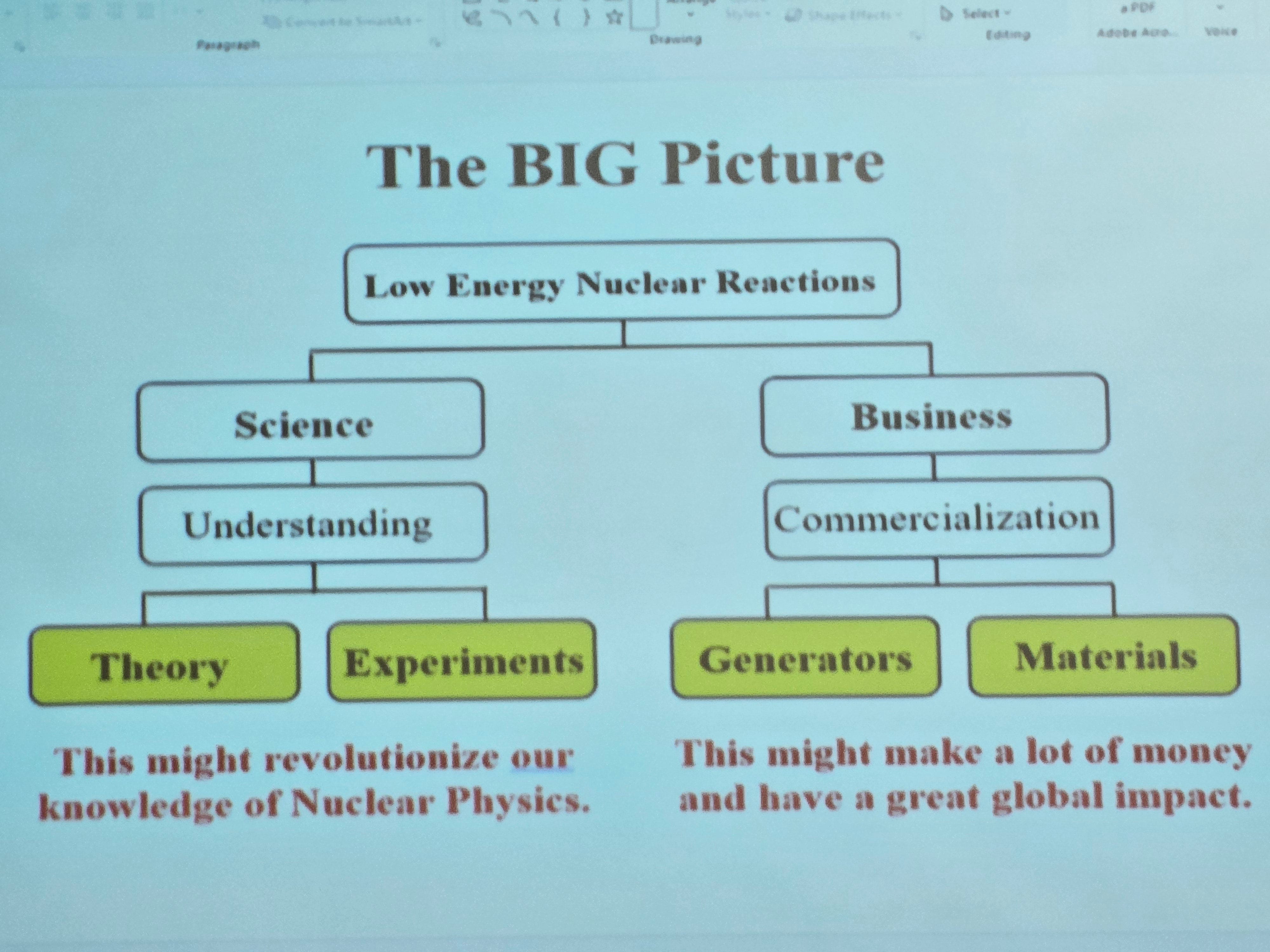
Prof. David Nagel (GWU) summarized it best in one picture:
But allow me to recap and start at the beginning. I think you’ll love every bit of this.
The Launch of AI accelerated Cold Fusion Research
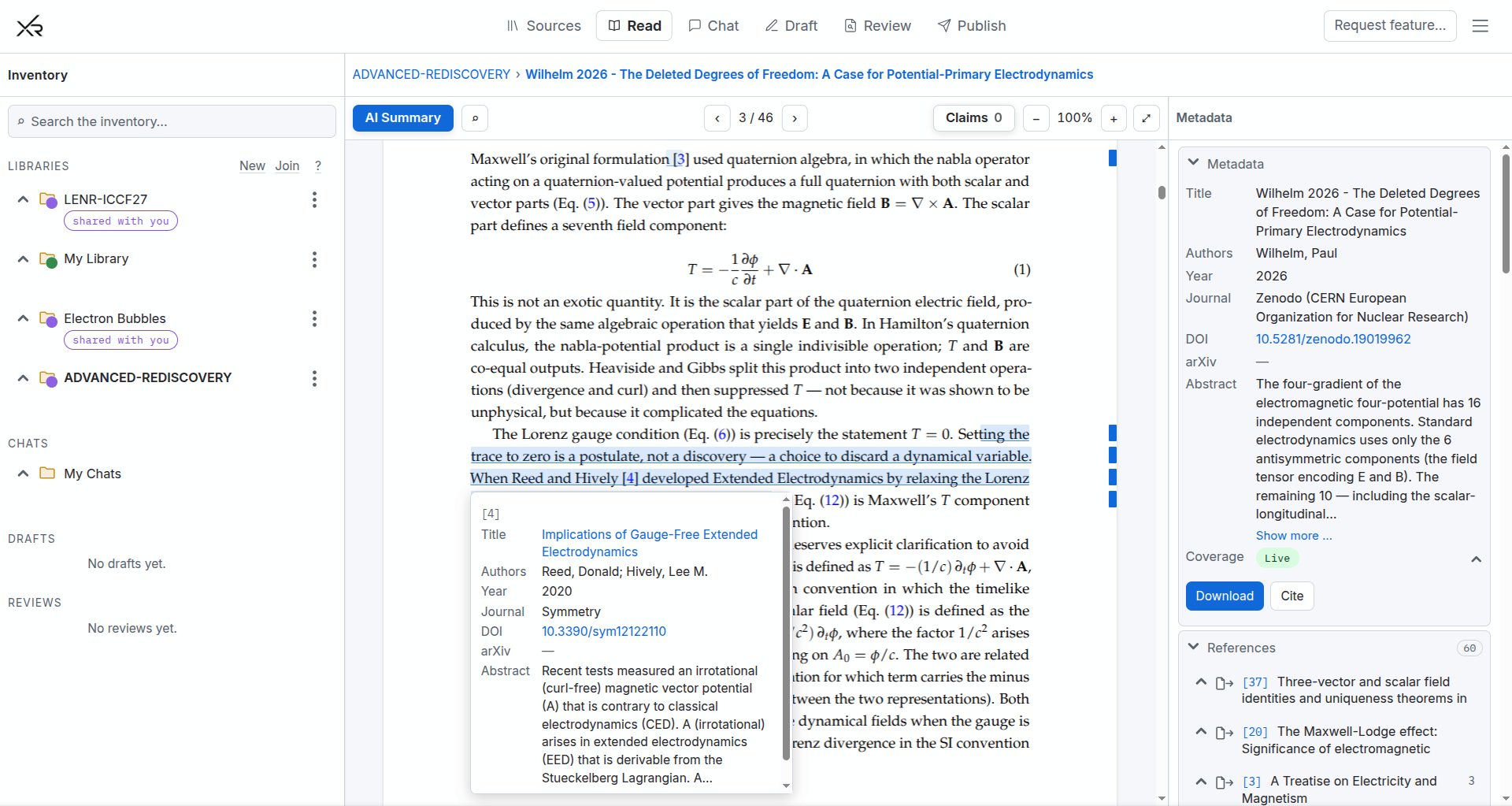
Me and my co-founder Prof. Marc Fleury spent the last months building xresearch.it, and we launched the app publicly at the conference (which we were also sponsoring) — with exceptionally positive feedback.
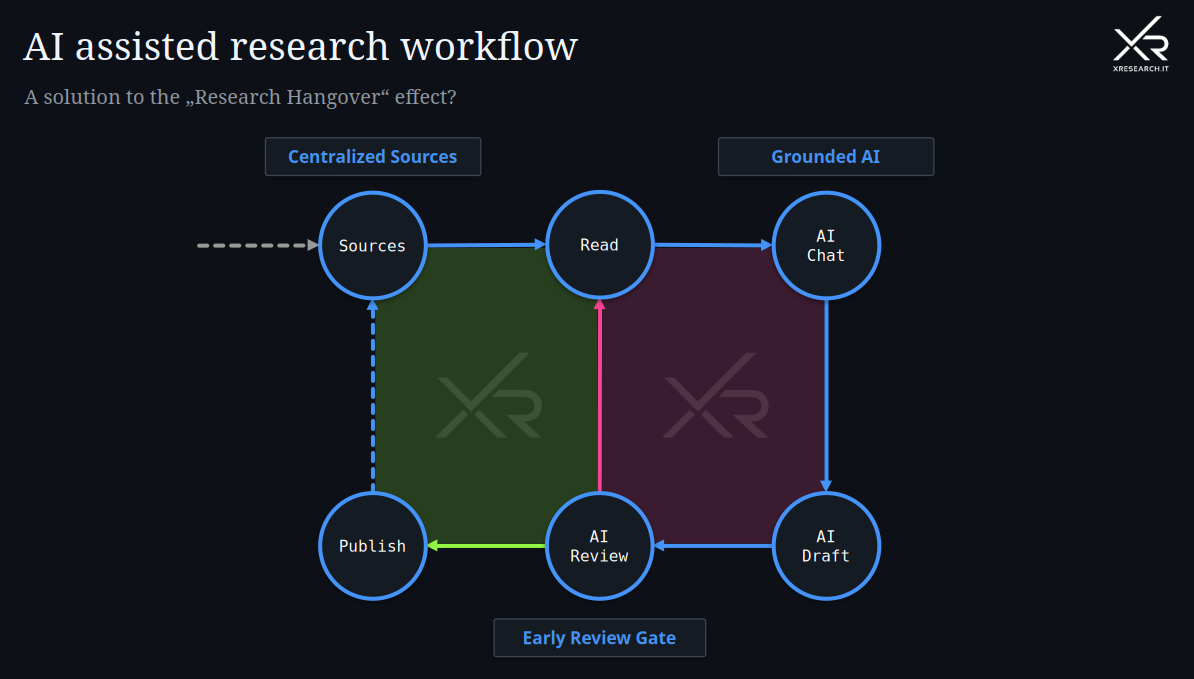
The idea is simple: Let AI focus on the PDFs, so you can focus on the ideas.
(This is exactly how I’ve written my paper The Deleted Degrees of Freedom: A Case for Potential-Primary Electrodynamics; also see Errata).
Honestly, I really didn’t know what to expect from attending ICCF-27, apart from it being the perfect opportunity of getting our app in the hands of researchers that could use it to actually make a difference in a way I personally care about.
What if we compiled the top 100 papers of the cold fusion field into a single library and make it AI accessible? Then we’d have a pretty good shot at enabling the community to advance the field MUCH more rapidly.
Turns out, we might have achieved that goal already. Now that the conference is over and having had the opportunity to get insights into the workflows of many high-profile researchers at the conference now considering switching to xresearch.it, I’m convinced that we’re on the right track with it.
Note: This app is not specific to cold fusion only. — It’s for everybody, practicing any line of research; xresearch.it is there to support you along the way. And we’re just getting started… new powerful features are being developed as we speak.

My AI-native research workflow is now available to you, for free.
I invite you to join my library and encourage you to start your own library.
Follow the link to enter xresearch.it for exclusive early access:
👉 https://xresearch.it/join?code=ADVANCED-REDISCOVERY 👈
We’d absolutely love to receive your feedback — email to team@xresearch.it
The Disclosure
There’s really no question whether cold fusion is real phenomenon anymore. Anomalous results are reported from different labs around the world — albeit with varying degrees of rigor, often as a function of sparse funding.
The people up high who need to know? They do know. — After this week, there’s not a shred of doubt in my mind about that anymore.
Marc Fleury dropped that truth bomb when he revealed proof of private correspondence between him and Paul Werbos, who has testified to having played a key role in the institutional suppression of Cold Fusion, and was in close contact to Julian Schwinger and Edward Teller at the time.
More on this soon. Make sure to subscribe or you’ll miss it.
The Gap in Theory
However, there’s still no agreeable theoretical framework explaining all of those very real observations associated with Cold Fusion.
Some of the ongoing efforts to close this gap were reported at ICCF-27.
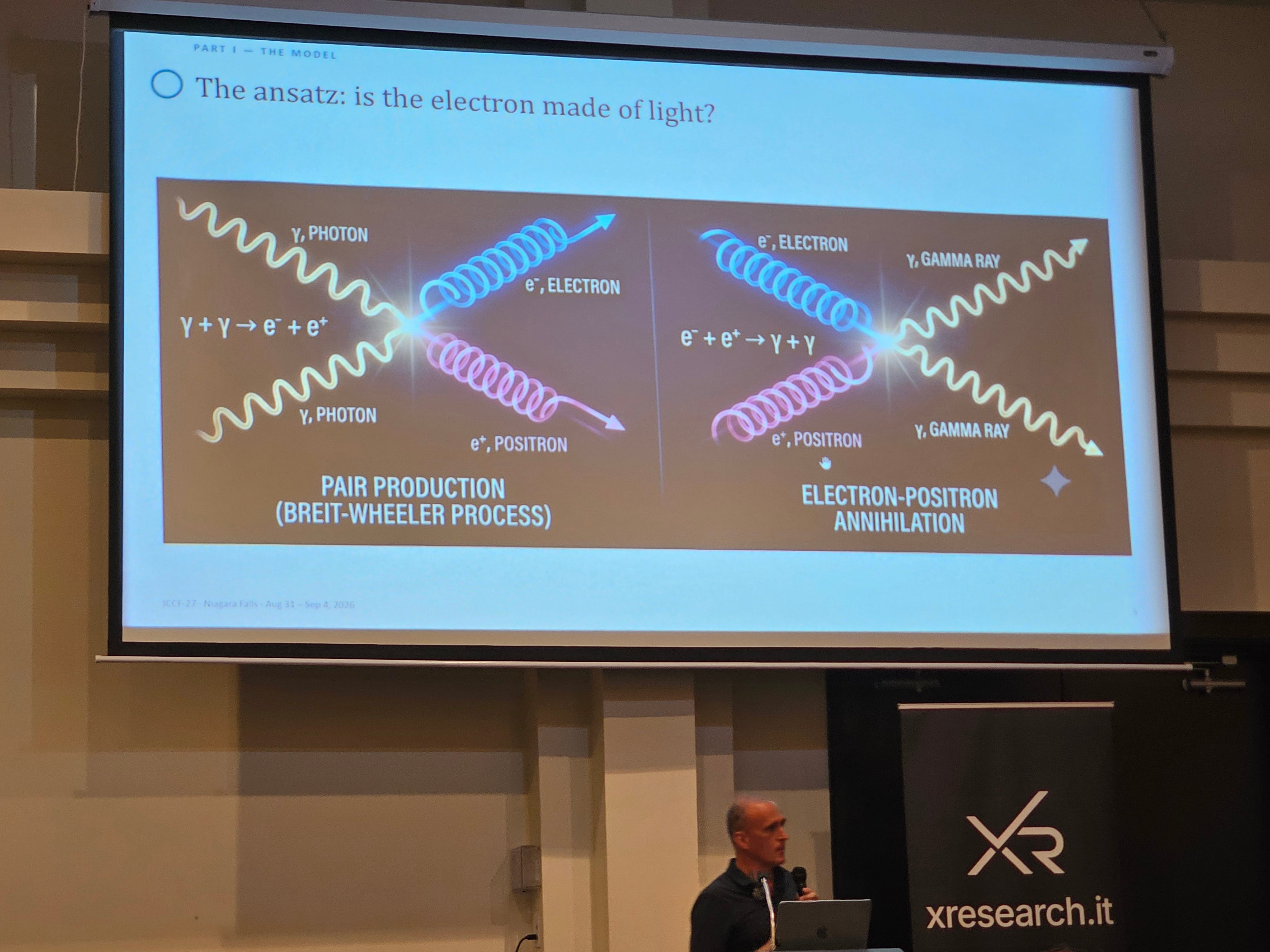
Marc Fleury presented a model of the electron based on the idea of Zitterbewegung as originated by Dirac and de Broglie. (Also see the works of the Zitter Institute). This model may be the stepping stone to explaining the charge clusters observed by Ken Shoulders and provide a unified reinterpretation of superconductivity, catalysis, and cold fusion.
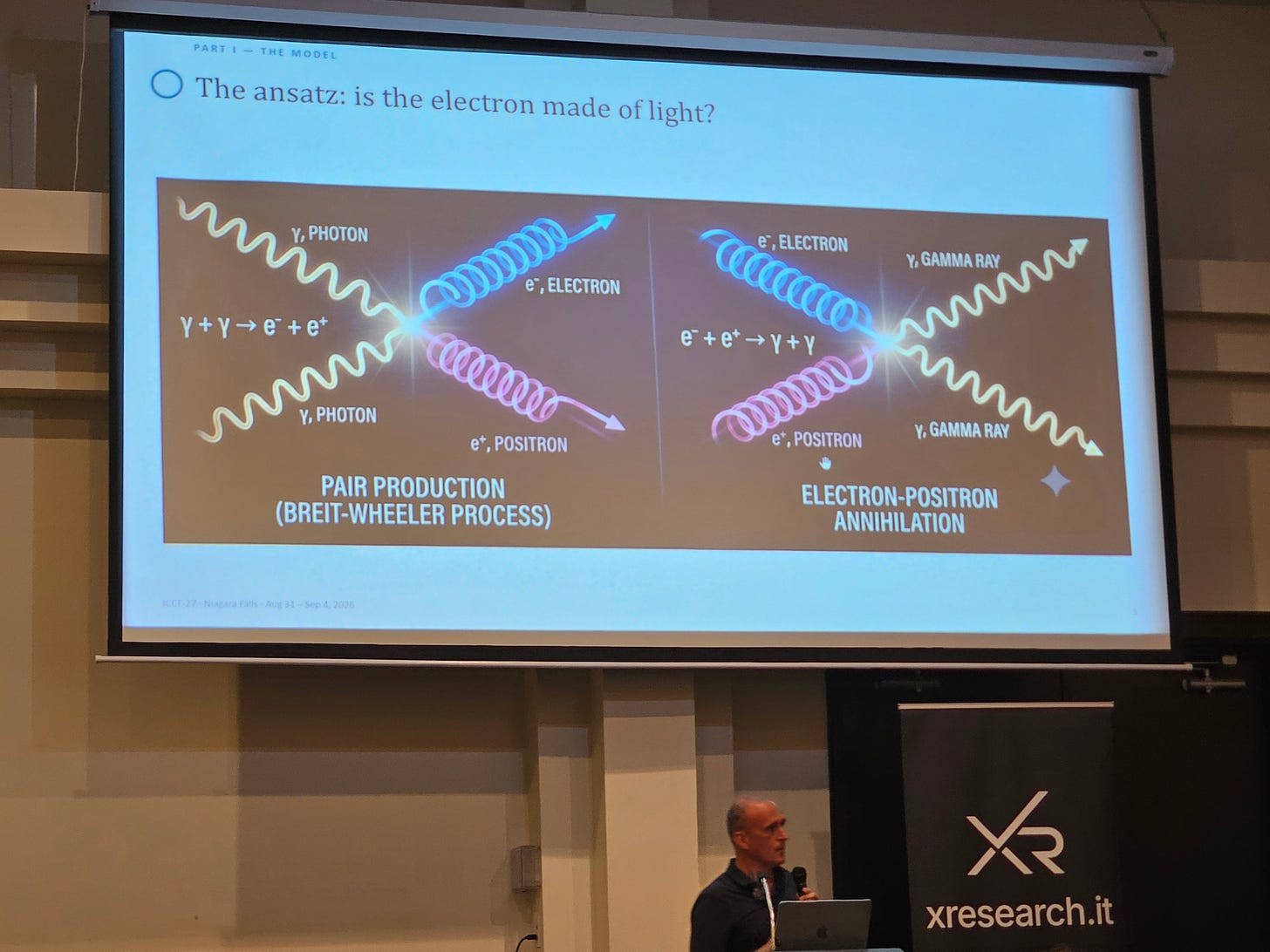
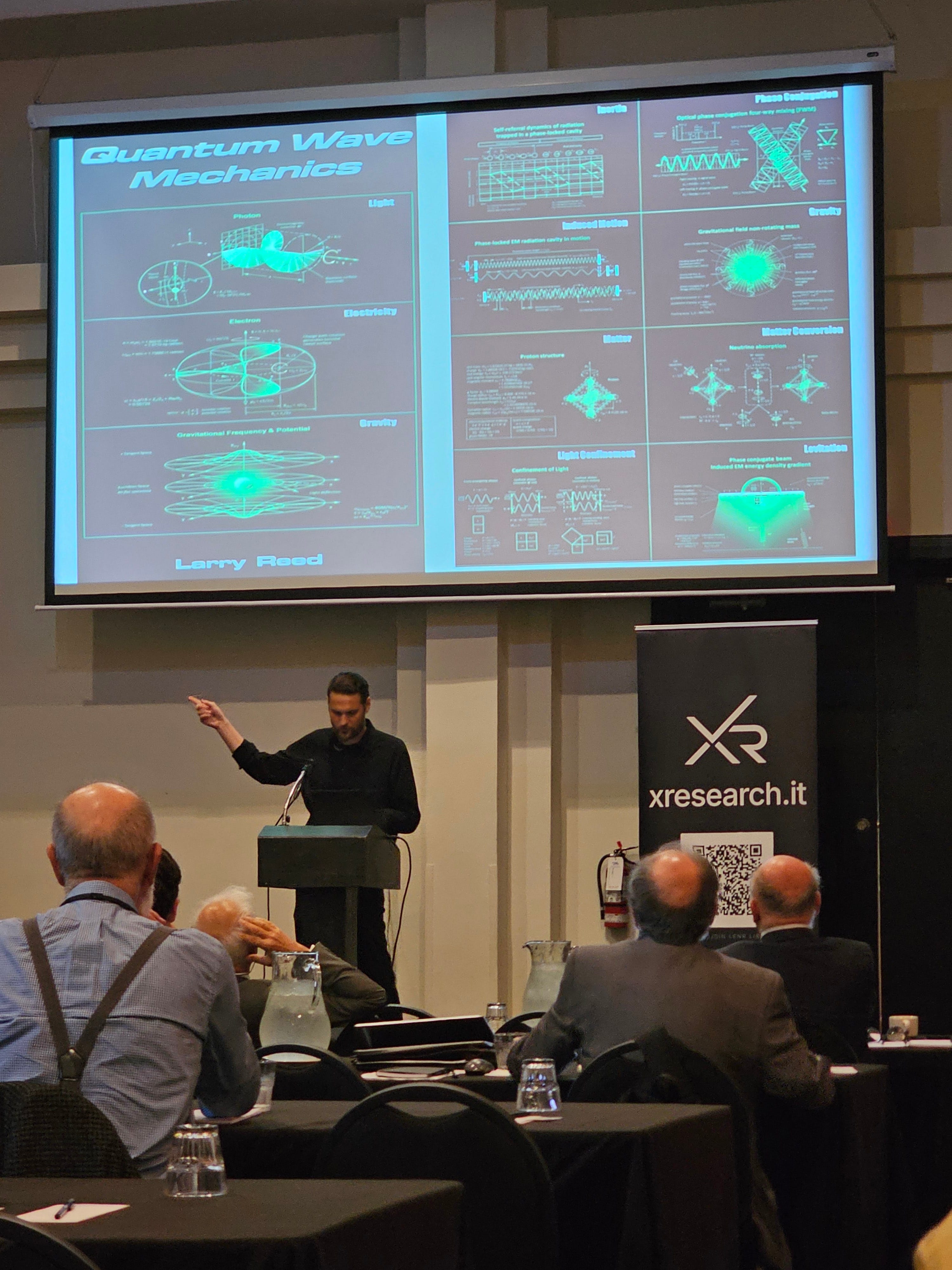
Marc Fleury presenting his Zitterbewegung model of the electron — a promising ansatz to unify superconductivity, catalysis, and cold fusion. Nathaniel Hanks (X: @na_thanks) presented a broad spectrum of ideas that conceptually seem to converge on the guiding principles governing the phenomena associated with cold fusion, in which the research of Larry J. Reed played a critical role.
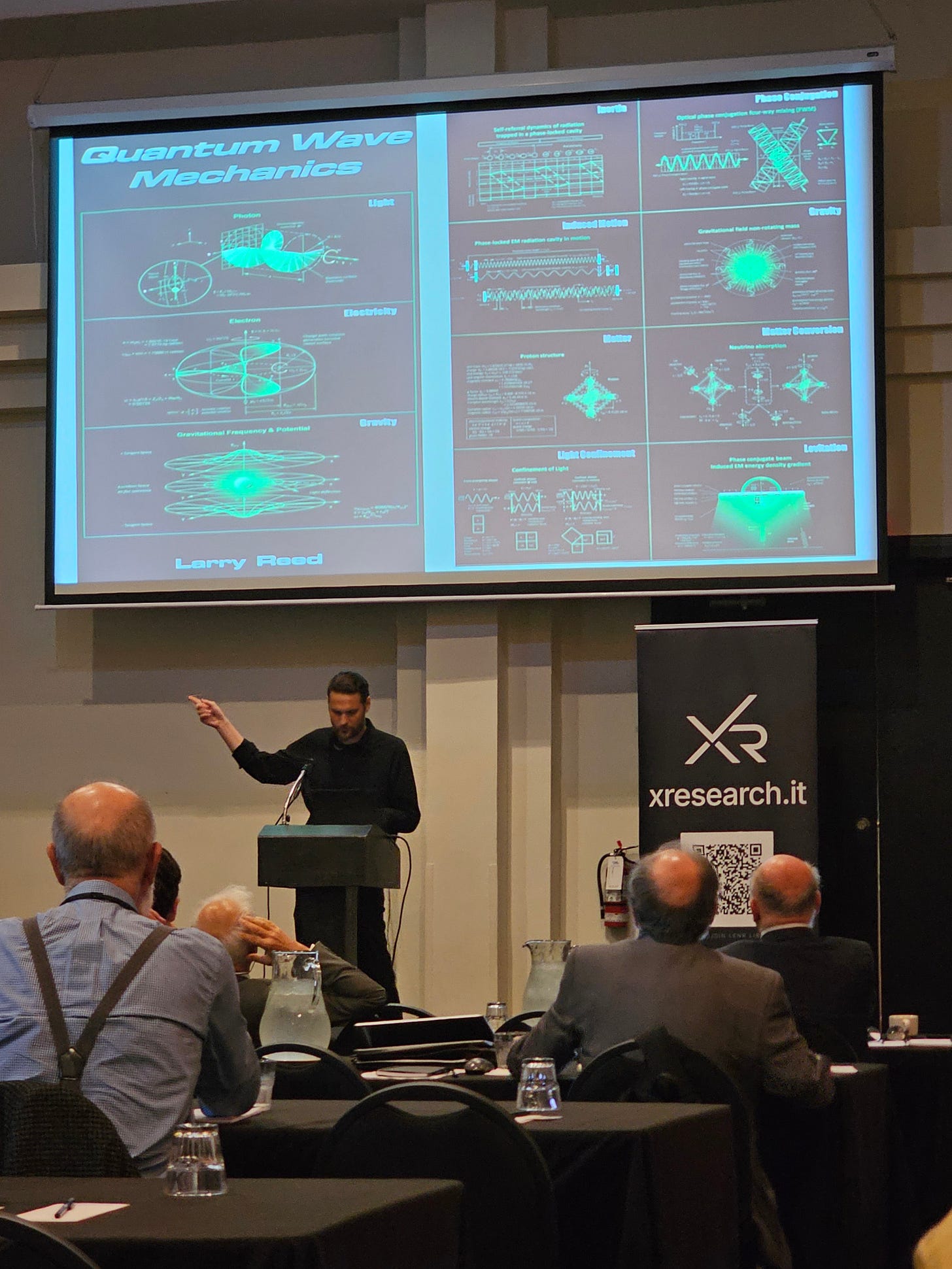
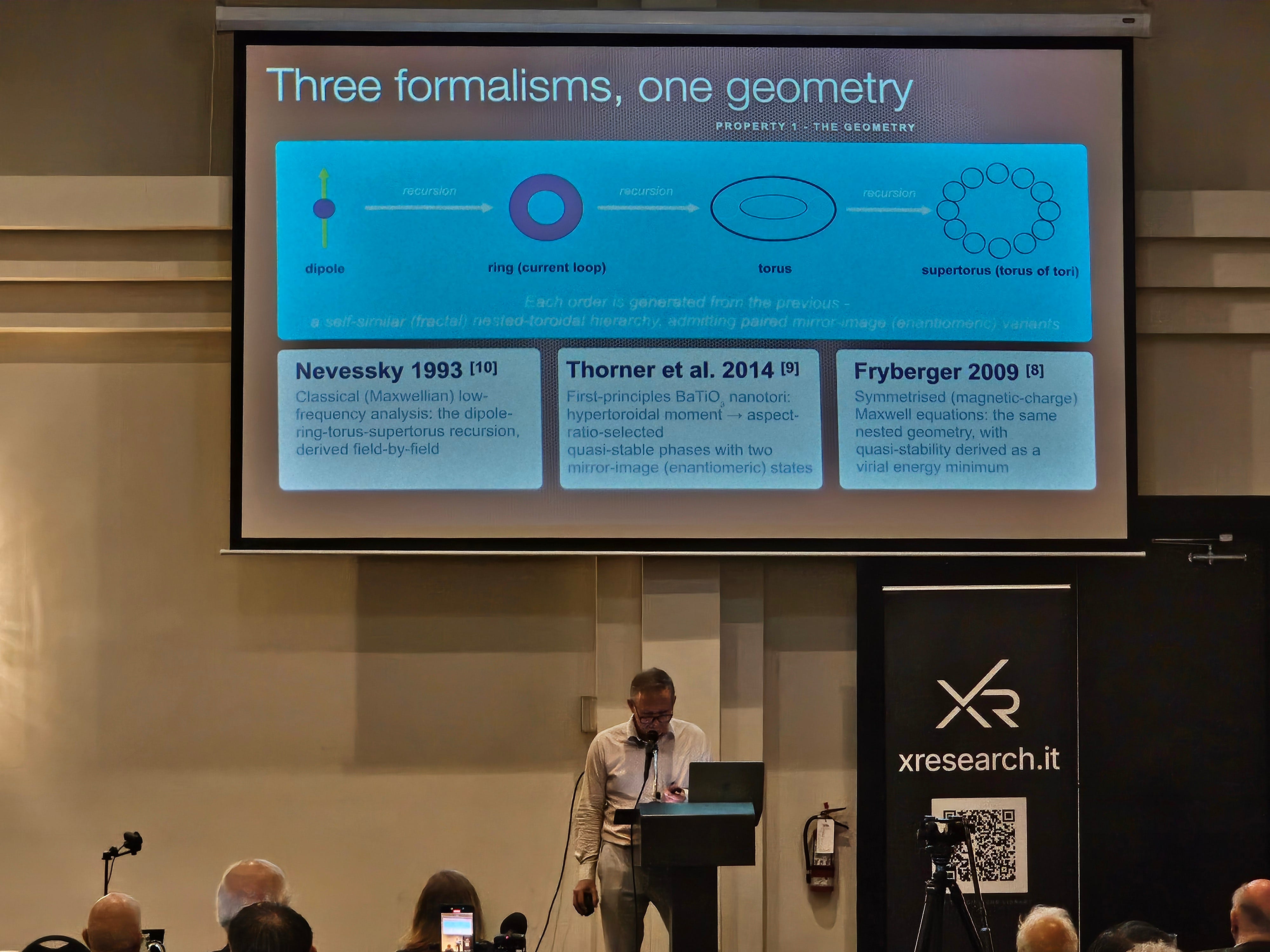
Nathaniel Hanks presenting his research into a unified field theory connecting dots across the cold fusion adjacent phenomenology. Bob Greenyer (X: @quantumheat) presented his synthesis of processes giving rise to electric charge clusters and cold fusion. Nested geometry of higher-order magnetic, toroidal, and anapole moments provides a coherent description for the emergence of ordered plasma states encountered in the research of Ken Shoulders — which is directly adjacent to cold fusion, as pointed out by Marc Fleury.
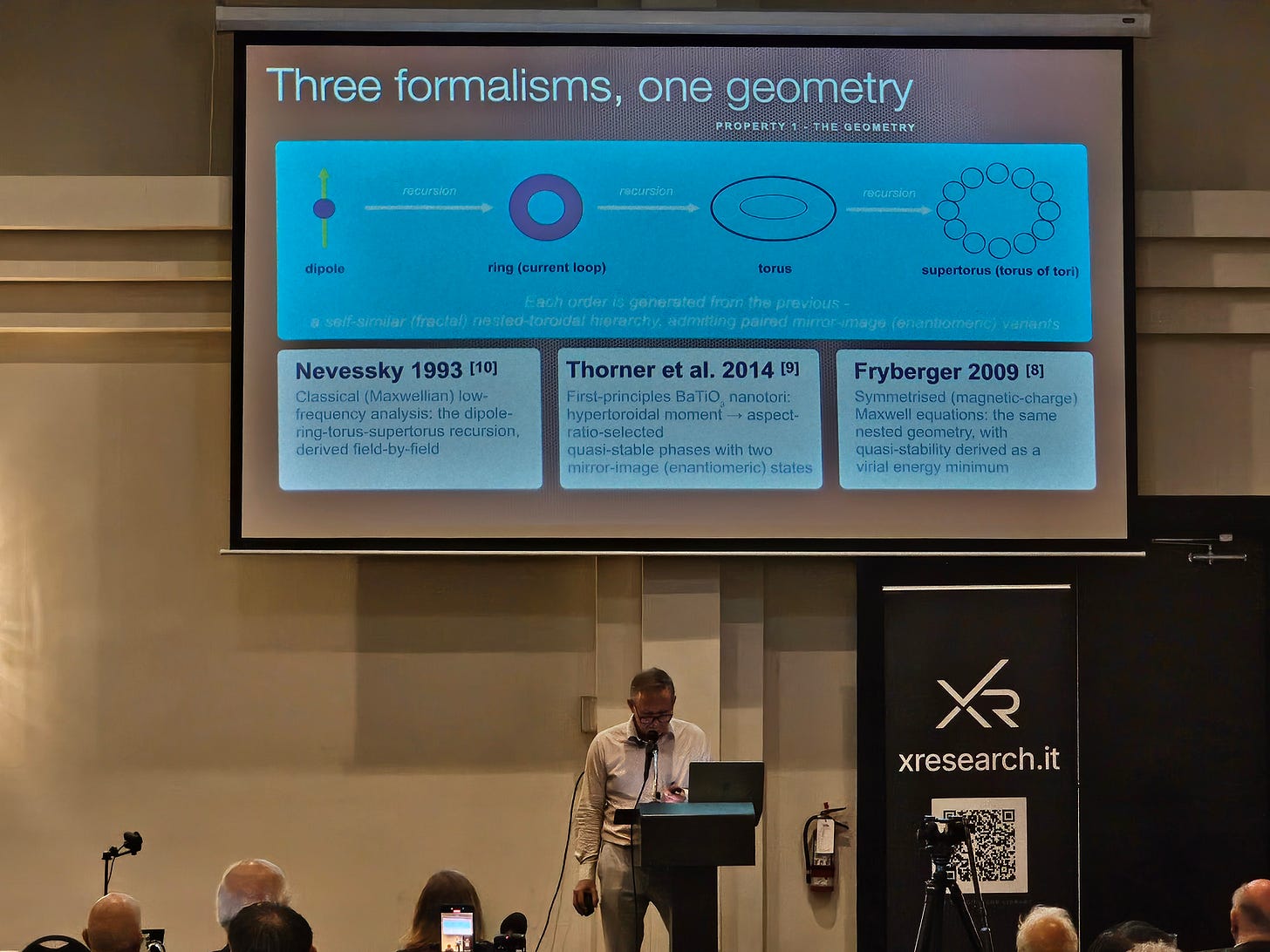
Bob Greenyer presenting his model to explain charge cluster and cold fusion effects using geometrically nested higher-order moments.
The People
I really had a blast connecting to so many great people at the conference.
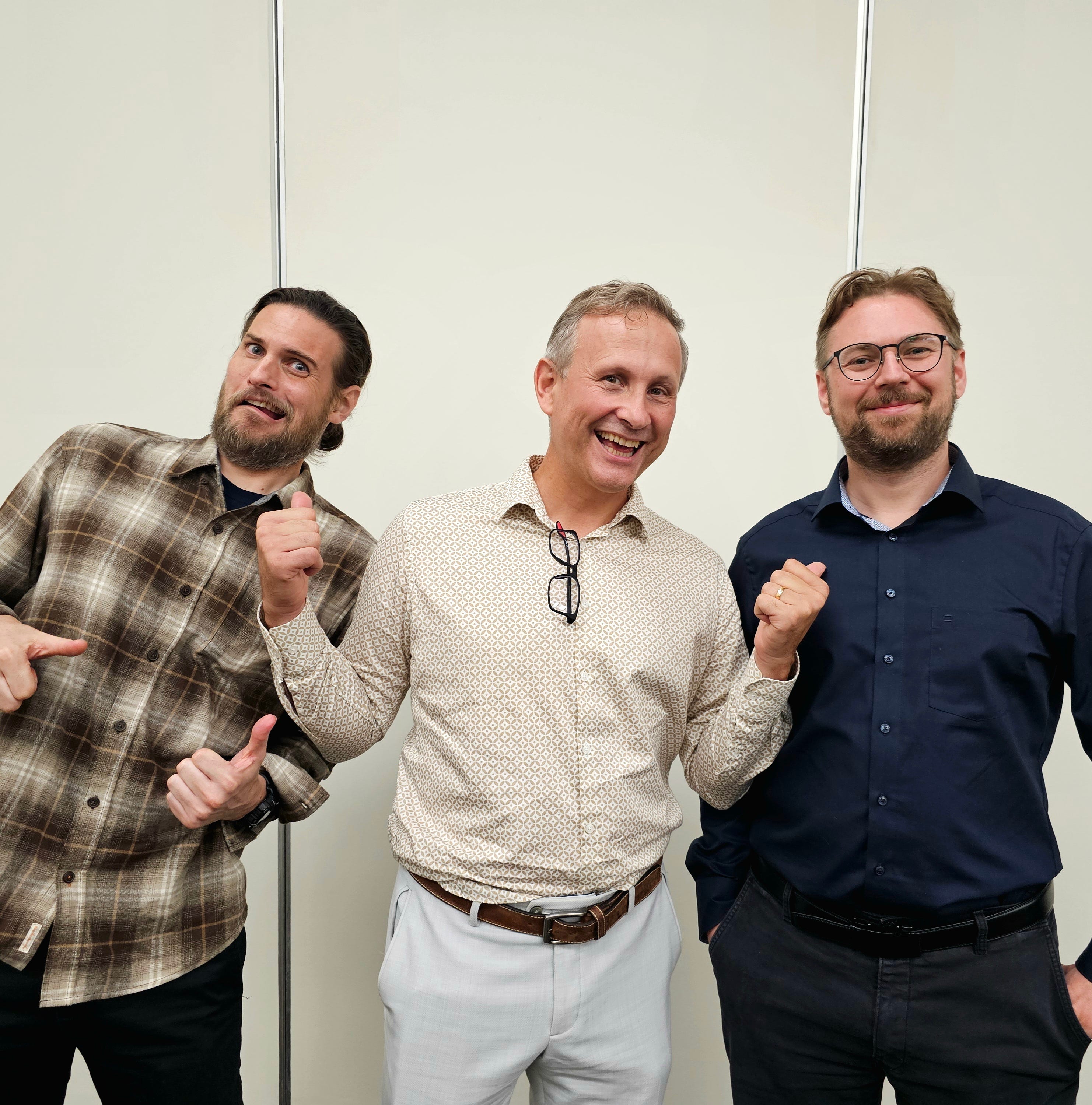
In particular, I’d like to thank Marc Fleury for enabling the rapid development of the xresearch.it app, as well as sponsoring the conference, and having inspired us all with his original research as well as the disclosure he presented at ICCF-27.
I’d like to thank Bob Greenyer (Martin Fleischmann Memorial Project) as well as Nathaniel Hanks (independent researcher and investigative journalist) for the many fruitful and inspiring discussion we had over the course of the week.
The Exponential Convergence
We need the theory matching the observed effects of cold fusion, which are undoubtedly real.
Although we’re not there yet, I think we’re very close. It’s all beginning to fall into place, and xresearch.it will get us there with the help of AI much faster than before.
Let’s just say that some of the ideas I had were reinforced by the discussions and impressions I got at the conference.
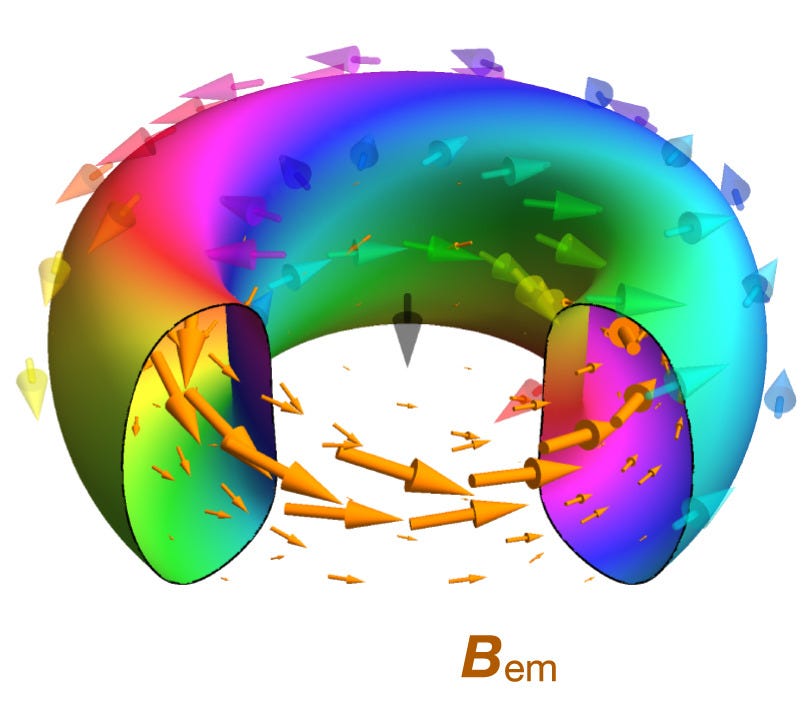
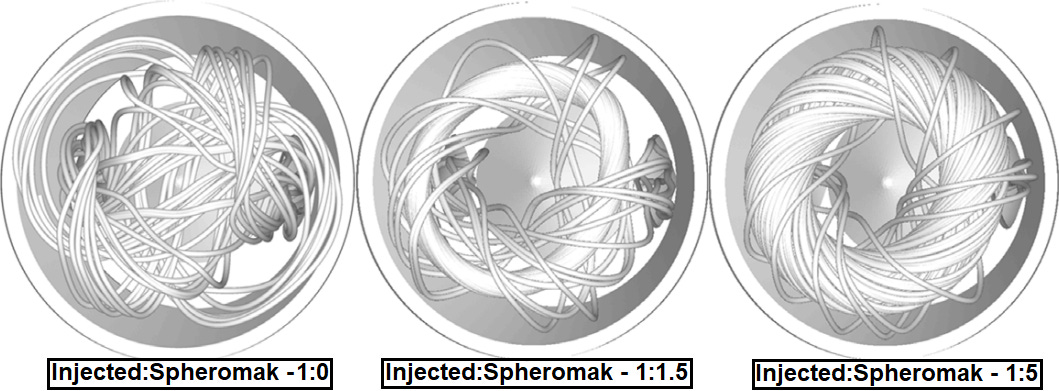
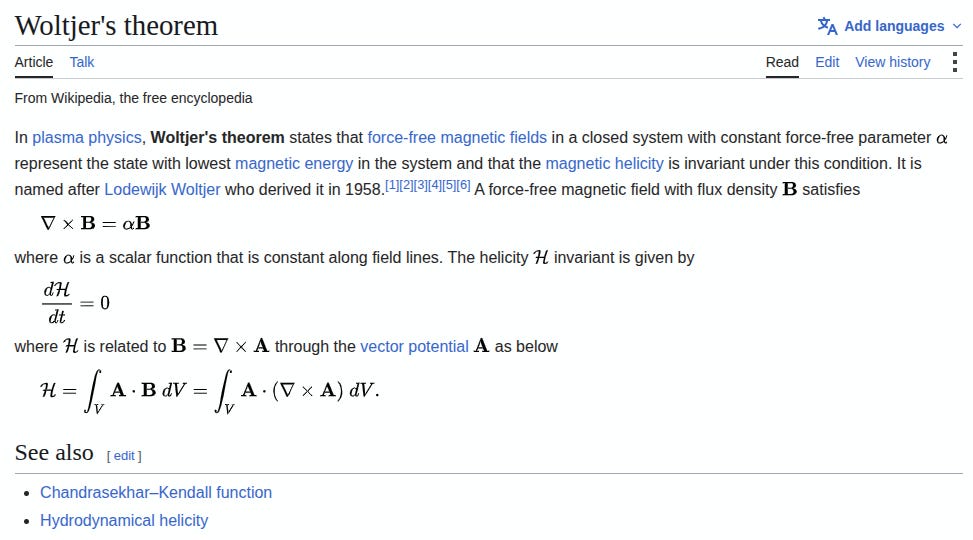
I’m just gonna leave this here to establish the conceptual grammar of the space we’re exploring. (Shamelessly borrowing this method as used by Nathaniel Hanks in his presentation.)
More detail on all of this will come in the following weeks.
You don’t want to miss this.
congrats!
I can help you with the agreeable framework...