


On March 23, 1989, two chemists stood in front of cameras in Salt Lake City and said a glass jar on their bench was making more heat than chemistry could explain. Not a reactor. Not a laser array. A jar of heavy water with a palladium rod in it.
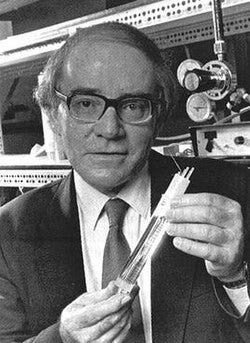
Within a year, “cold fusion” had become the most radioactive phrase in science. Careers ended over it. The name itself turned into shorthand for wishful thinking. And physics moved on, satisfied the case was closed.
I’m an engineer. I opened the cold-fusion literature expecting to debunk it over a weekend. That was months ago. I’m still reading. And the honest position I’ve landed on is neither “it’s real” nor “it’s bunk.”
It’s this: the theory we used to dismiss it was missing most of its parts.
This read-along stays free because paid subscribers fund it.
The year physics stopped looking
Here’s the story you know, if you know one at all. Martin Fleischmann and Stanley Pons announce excess heat from a tabletop electrolysis cell at the University of Utah. The world goes briefly insane. Big labs rush to replicate. The replications come up empty. Case closed by Christmas.
The story holds up until you read the details of those replications.
The effect, as later work mapped it, has an entry condition: the palladium electrode has to be loaded with deuterium past a threshold. Michael McKubre’s group at SRI International and Kunimatsu’s group in Japan both pinned it around a deuterium-to-palladium ratio of 0.85 to 0.9, and the functional relationship between loading and excess heat was laid out in parallel by two independent groups in 1992. Below that loading, nothing happens. Reliably nothing.
The famous null replications ran below it.
Sit with that for a second. A null result below threshold is not evidence against the effect. It’s a measurement of the threshold. If I tell you water boils at 100°C and you heat it to 70°C and report “no boiling observed,” you haven’t debunked boiling.
None of this proves the anomaly is nuclear, or new physics, or anything at all. Calorimetry is hard, and hard measurements deserve suspicion. But “we checked and found nothing” is not what happened in 1989. What happened is the field checked below the entry condition, declared the file closed, and trained a generation of physicists to smirk at the folder.
The folder kept filling anyway. It has been filling since 1989.
What the claim is not
Before going further I want to kill a strawman, because it arrives in the first comment of every conversation on this topic.
Nobody serious in this literature is claiming free energy. Nothing here breaks the first law of thermodynamics. Nothing extracts work from nothing. The pile of reports is about heat that chemical bookkeeping can’t account for: cells that produce more thermal energy than every known chemical pathway in the cell can supply. The energy bill still gets paid in full. The open question is what account it’s being paid from.
“You can’t get energy from nowhere” is true, and it is also not the claim under discussion. The claim under discussion is: something in these metal lattices releases energy through a channel we haven’t identified. That’s not perpetual motion. That’s an accounting discrepancy, reported for decades, at laboratories that knew how to run a calorimeter.
Maybe every single report is an artifact. That would itself be worth understanding, given how many independent hands have produced them. But you don’t get to skip the audit by shouting “thermodynamics” at a claim that never violated it.
The part of the theory nobody checked
Here’s where my own work enters, and why I’m writing this series at all.
The electromagnetism in your textbook describes fields with 6 numbers at every point in space: three for the electric field, three for the magnetic field. But the object those fields are carved from carries 16 independent components. That’s not an exotic claim; it’s the arithmetic of the four-dimensional gradient of the four-potential. In the 1880s, for entirely practical reasons, the framework was compressed: 16 components in, 6 kept, 10 projected away. The compression was so successful that we stopped teaching that anything had been compressed.
I spent a long time mapping what lives in those deleted 10. The result is my paper “The Deleted Degrees of Freedom,” free on my research page. The short version: the deleted components aren’t junk. They carry physics the 6-component theory can’t represent even in principle: scalar channels, longitudinal modes, force-free potentials.

One caveat before anyone hands it to me, because I would rather say it myself. Those sixteen are components of a derived object, and if you count what actually propagates rather than what appears in the arithmetic, relaxing the convention buys you one new mode, not ten. Ten would be the better headline. It also would not be true, and a claim you have to inflate to make interesting is not worth making.
One mode is still one mode. Now look at what the anomaly literature keeps tripping over.
Force-free plasma structures. In 1956 Winston Bostick photographed plasmoids, self-organizing blobs of plasma that hold their shape without confinement. In 1974 J.B. Taylor showed why: plasmas relax into states where the current runs parallel to its own magnetic field, ∇×𝐁 = λ𝐁, and the Lorentz force vanishes. The plasma stops fighting itself. This is accepted plasma physics; it explains how reversed-field pinch reactors spontaneously order themselves.
That is standard magnetohydrodynamics and it needs nothing anybody deleted. What makes it worth a section here is narrower: force-free means the electromagnetic force on the plasma is zero by construction, so the one channel the six-component theory has for a field to push through is pinned at exactly nothing. The textbook explains the state completely and in the same breath runs out of anything to measure in it.
Which is where a name collision starts mattering. “Force-free” in plasma physics means the field exerts no force on the current. “Force-free” in the potentials sector means something else: structure in 𝐀 that produces no field at all, which is the situation Aharonov-Bohm made famous. They are not the same object, and the second is the one my paper is about.
Dense electron clusters. Kenneth Shoulders spent three decades producing micron-scale clusters of a hundred billion electrons that hold together when Coulomb repulsion says they should detonate instantly. They bore clean tracks through solid material. Richard Feynman didn’t believe it at first, then apologized in a letter. Whatever binds them is not in the 6-component theory.
Magnetic monopoles show up in this literature too, and there I stay genuinely agnostic. I have no theory to sell about monopoles. What I notice is the pattern: every time an experiment produces an anomaly the standard framework can’t hold, the missing piece points at the same deleted subspace.
One anomaly is a fluke. A class of anomalies with the same shape is a signpost.
The read-along
So that’s what this August is. I’m reading the cold-fusion and LENR literature in public, as an engineer, with the full 16-component theory on the desk instead of the compressed one. Excess heat, loading thresholds, the plasma structures, the electron clusters. What holds up, what doesn’t, and what changes when you stop insisting the anomalies fit in 6 components.
I won’t promise you it’s real. I will promise you the dismissal was cheaper than it should have been, and that re-running it with the complete theory is worth a month of anyone’s attention.
The deleted components are sitting right there. Someone should finally ask them about the heat.
⏭️ Next: the anomaly ledger itself. Which cold-fusion results have survived hostile scrutiny since 1989, which evaporated, and the one detail in the calorimetry record that nobody’s smirk has ever answered.
📬 Article 1 of the series. Subscribe free and the whole read-along lands in your inbox: the physics that textbooks skip.
🔁 If this article resonated, a Restack helps others find it.
Research papers free at advanced-rediscovery.com/research · @drxwilhelm on X · Substack · YouTube
Correction, 12 August 2026. An earlier version listed force-free plasma configurations among the physics the six-component theory cannot represent, and said the deleted components accommodate them naturally. Both were wrong: Taylor relaxation is ordinary magnetohydrodynamics and explains those states completely. @VortexVerity and @marcf999 made the point on X and it stands. The paper says “force-free potentials”, which is a different object, and welding the two together was mine to fix. The section now says what I meant.
Dr. Wilhelm, congratulations on a fascinating and very readable article. We especially appreciate the posture you have taken toward cold fusion/LENR: neither declaring it established nor dismissing decades of anomalous results because the subject became scientifically unfashionable. Revisiting the experimental record, including loading conditions and other boundary conditions that may not have been reproduced consistently in the earliest replication efforts, seems entirely warranted.
One development that makes the timing of your series particularly interesting is the July 2026 Nature Communications work demonstrating strongly enhanced low-energy D–D fusion behavior in palladium and titanium hydrides. It certainly does not validate Fleischmann–Pons or LENR generally, but it does provide mainstream experimental evidence that a condensed-matter environment can significantly influence nuclear reaction behavior at low energies. That strengthens the case for asking whether highly organized metal–deuterium systems may contain physics that deserves a closer look.
Our only constructive suggestion would be a little caution in how strongly some of the anomalous systems are connected to the deleted subspace. Force-free Taylor states, for example, already have a conventional Maxwell–MHD description, while the Shoulders observations remain open to several possible interpretations. We nevertheless agree that the recurring pattern is intriguing, and these systems strike us as particularly interesting test cases for your expanded electrodynamics—especially if the additional mode can ultimately predict something measurable that the conventional treatment does not. That would turn an intriguing “signpost,” to use your term, into a genuine experimental discriminator. We very much look forward to the next article.
Excellent work and thank you for being one of the voices willing to give something like Cold Fusion an honest look despite the background noise of popular misinformation.